System 05FrameworkLive
ERP + Bot VN
Architect, since 2026
The shared framework underneath the other systems: a web ERP and a Telegram/Zalo bot, one dedicated deployment per company, differing only in configuration.
- Company
- My own framework, source not yet open, license still being chosen; reused libraries keep their original licenses
- Role
- Architecture, distilled from three systems of my own; I review and test it myself
- Status
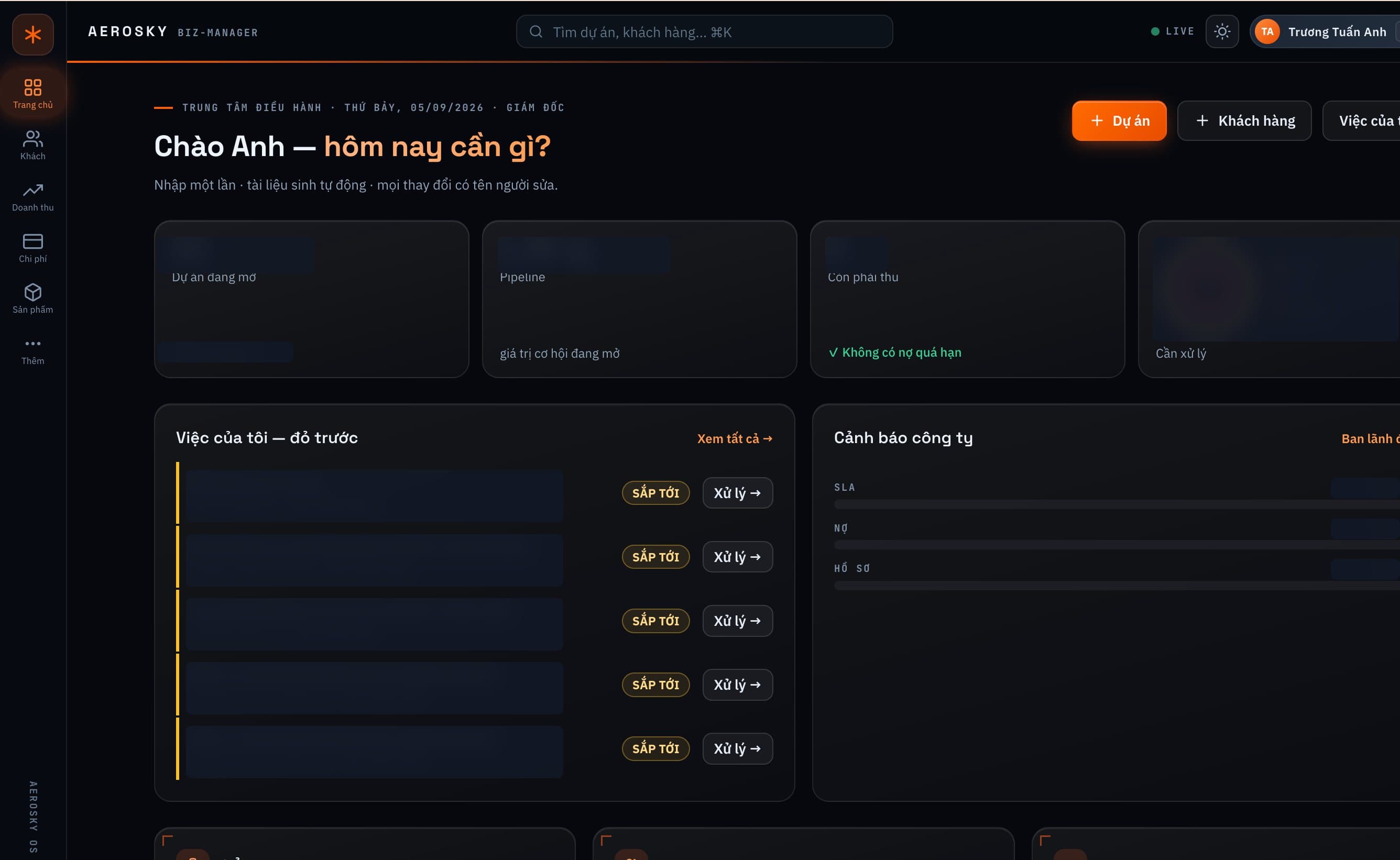
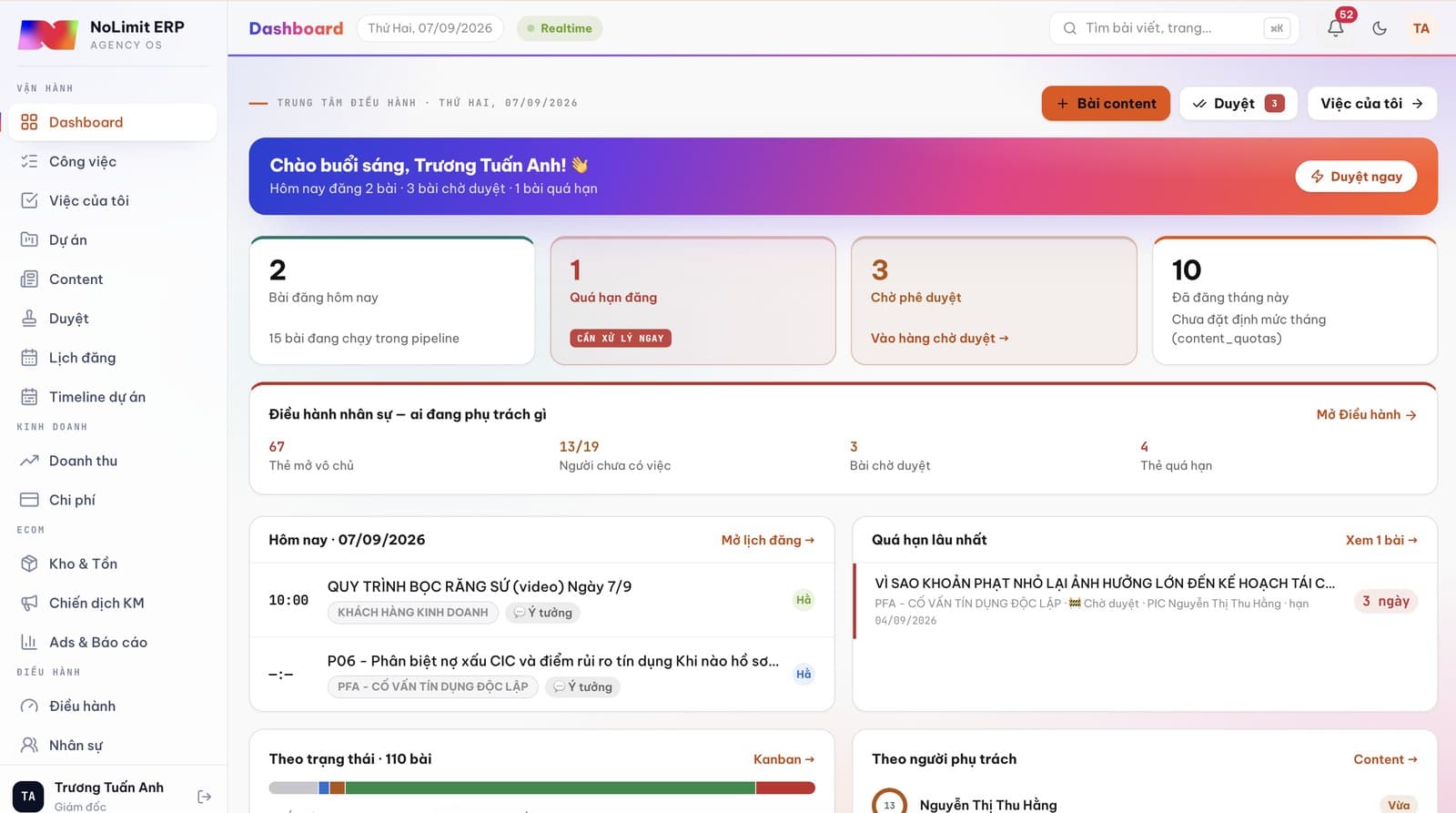
Running in production underneath the other systems: AeroSky's Biz-Manager and NoLimit's internal ERP are both built on this framework. The test suite was re-run on 3 Sep 2026 and passed in full.
Selling it on its own to an outside company is the next step and is not open yet.
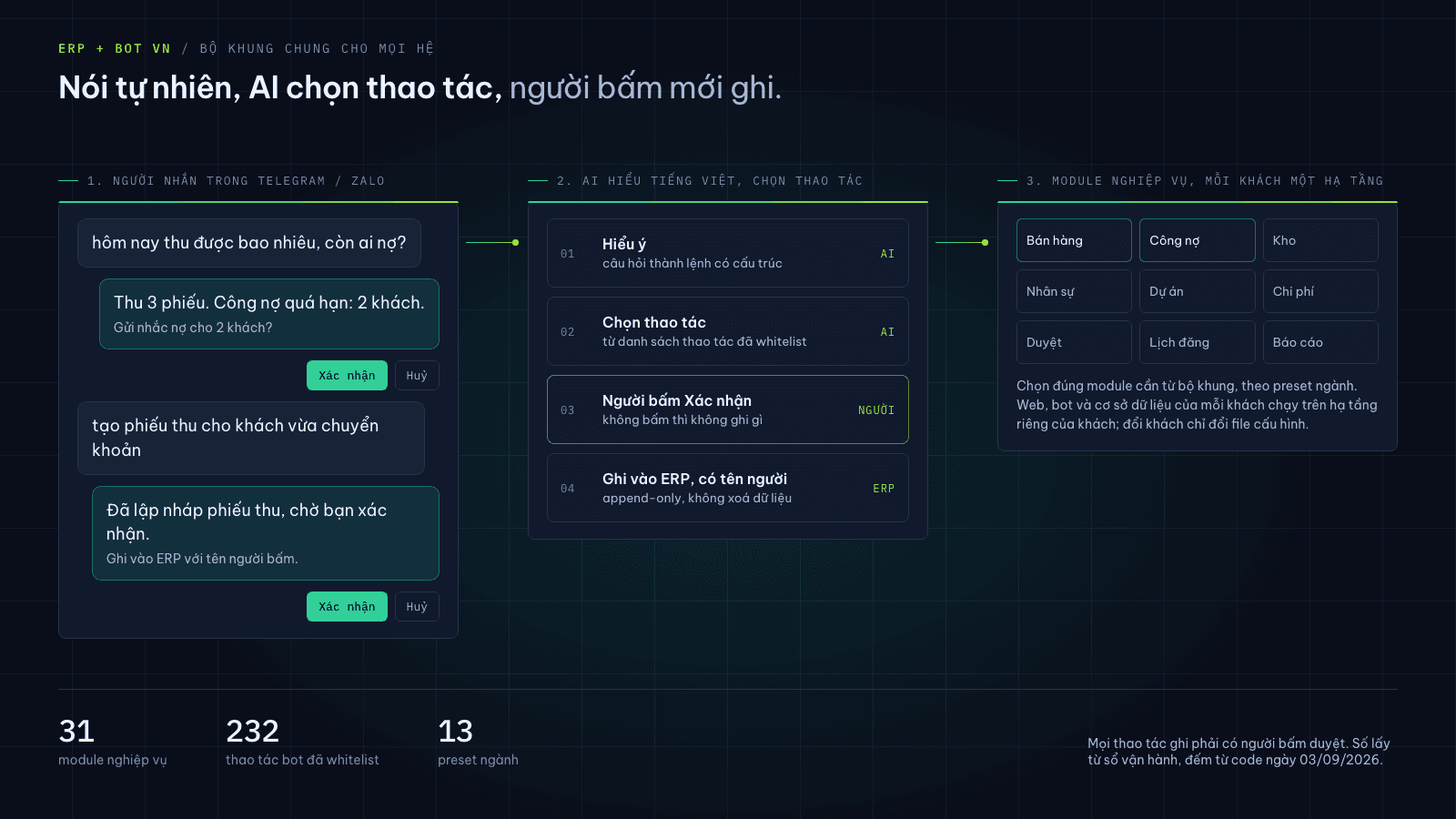
Functional diagram, drawn from the real structure.
Metrics
- 31business modules, 232 bot actions, 13 industry packs; all load, 0 errors
- 269business checks, all passing; alongside 16 unit tests, 14 cryptography tests and 7 structural audits
- 8steps in a client lifecycle: principles, survey, module selection, quotation, provisioning, customization, verification, handover
- 0clients have been through the full cycle; the six files that exist are all simulations
Interface screenshots
The story
Starting point
The three companies I run do three different kinds of work on one software structure: a single database as the source of truth, web and bot as two thin interfaces calling the same set of operations, AI choosing the operation but a person approving every write. I packaged that structure into a framework I can stand up for other companies.
Read on: approach, result and lesson
Approach
The bar for entering the core is deliberately high: a pattern has to appear in at least two companies before it goes into the core, and a pattern seen at one company becomes an optional module. The core stays identical from client to client.
Seven of the 31 modules can run in connector mode against software the client already uses, read-only, keeping a single source of figures.
Result
The framework verifies itself with 269 checks and 7 structural audits, which run even on a machine with no Node installed. A new check is not trusted until it has been deliberately broken to prove it catches the fault.
During the build it caught more than 80 defects.
Lesson
The pricing model was rewritten after a simulation exposed the gap: what is sold is the rollout work, and the source stays with the framework; a packaged framework fee plus rollout hours, quoted with a range, and a section stating plainly when the client should be sent elsewhere.
Technical decisions
Each business operation is declared once, shared by people and AI
Each business operation is declared once and then shared: working on the web, messaging the bot, or asking the AI to do it all run down the same path, so three ways in cannot produce three different answers.
Send it twice, it still counts once
Every transaction carries its own key, so sending it twice still writes once, and the database is the last net, with every write path passing through it, the admin path included.
Each system learns from the log of the one before
The operations log of the earlier system was distilled into a lessons document, and the gaps it exposed were patched straight into the framework: an acknowledge button in the assign-and-accept loop, pulling a post back for edits, and a send queue that reports the true result.
From this system
Running a 2 to 10 person company on Zalo chat and Excel?
This framework already runs underneath my own systems. For the first outside company: a survey of the pain points with numbers attached, module selection, a quotation with a range, built on your own infrastructure. The price is good and I am close by.